
Engine oil
Passenger cars, vans, trucks, agricultural machines, generators.
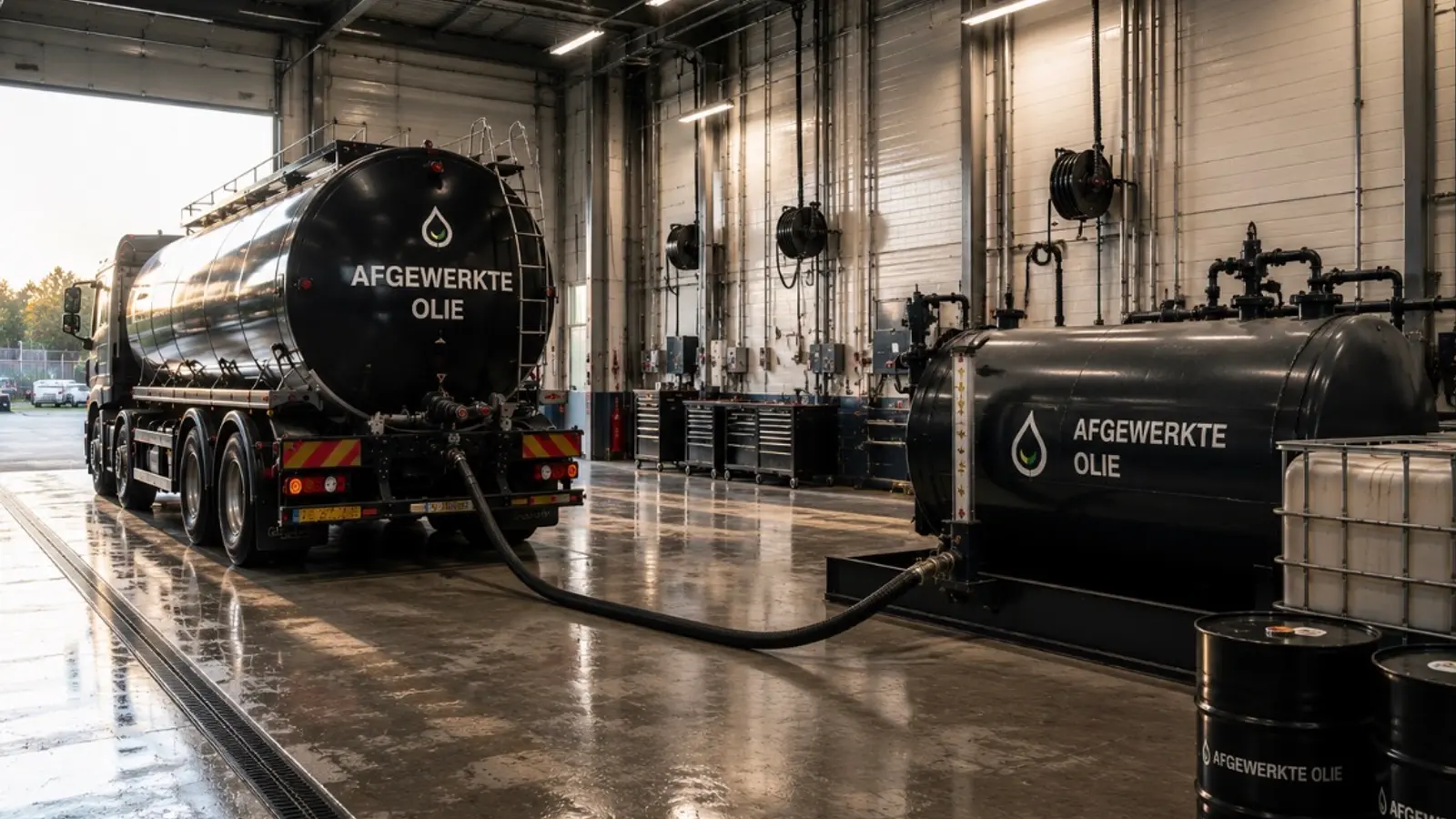
Waste oil is mineral or synthetic oil that has become contaminated through use and is no longer suitable for its original function. It is legally classified as hazardous waste (EURAL code 13 02) and may only be collected and disposed of by a VIHB-registered collector. After correct collection, waste oil is often recycled into new raw materials.
Passenger cars, vans, trucks, agricultural machines, generators.
Excavators, shovels, forklifts, industrial hydraulic installations.
Passenger cars, commercial vehicles, industrial drives, gearboxes.
Bearings, compressors, production lines, industrial machines.
Screw compressors, compressed-air installations, cooling systems.
Power plants, wind turbines, industrial installations, lathes, milling machines.
Not sure whether your oil counts as waste oil? Report the waste stream via the form. We assess the situation and contact you.
Yes. Waste oil is legally hazardous waste. Strict rules therefore apply to its storage, transport and processing:
Read more about the rules in our knowledge base: Disposing of waste oil legally.
| EURAL code | Description |
|---|---|
| 13 02 05* | Non-chlorinated mineral engine, gear and lubricating oil |
| 13 02 06* | Synthetic engine, gear and lubricating oil |
| 13 02 08* | Other engine, gear and lubricating oil |
| 13 01 10* | Non-chlorinated mineral hydraulic oil |
| 13 03 07* | Non-chlorinated mineral insulating and heat-transfer oil |
* = hazardous waste. Codes per the European Waste Catalogue (EURAL); your exact code depends on the origin and composition of the oil.
Often, yes. Clean, uncontaminated waste oil is a valuable raw material. Whether you receive compensation — and how much — depends on three factors:
Read when and how much compensation is possible in our knowledge base: Compensation for waste oil.
Fill in the form and tell us how many litres of waste oil you have available.
We contact you to coordinate the collection.
The waste oil is collected on site according to the agreed appointment.
You receive the required waste documentation. Depending on volume and quality, compensation may apply.
In addition to waste oil, we can also help you safely and correctly dispose of various hazardous waste streams.
All mineral or synthetic oil that has become contaminated through use and is no longer suitable for its original function — such as engine, hydraulic, transmission, lubricating and compressor oil. This falls under EURAL chapter 13 and is hazardous waste.
Yes. Waste oil is legally hazardous waste (EURAL code 13 02) and may only be collected, transported and processed by a VIHB-registered collector. Incorrect disposal can lead to fines and liability.
Often, yes. Clean, uncontaminated oil is a valuable raw material. The amount of compensation depends on the volume, the quality and the current market price. With a fixed collection schedule we agree transparent terms.
In many cases we collect within a few working days. For recurring streams we set up a fixed collection schedule, so your storage never overflows.
That depends on your location and the waste stream. Larger volumes make transport more efficient and the compensation more favourable; for smaller quantities we can combine streams or arrange a collection moment.
No. The collection and transport of waste oil may only be done by a collector listed on the VIHB register. IAM is VIHB-registered and arranges the legally required accompaniment note and reporting.
You receive a waste accompaniment note and watertight waste-stream documentation. With these you can demonstrate during an inspection or audit that your waste oil was disposed of correctly and traceably.
Yes. Besides waste oil we also collect oil filters, fuel filters, coolant, brake fluid, oil-water mixtures and oily cleaning cloths — often in a single collection.
In-depth guides on the rules, compensation and safe storage of waste oil.
Which rules apply and how to keep your records in order.
When you receive compensation and what determines the amount.
Five practical tips for safe storage until collection.
Separator-tank contents, sludge-pit contents and emulsions.
Would you like to have waste oil collected? Fill in the form below. We will contact you as soon as possible to assess and schedule the collection.